
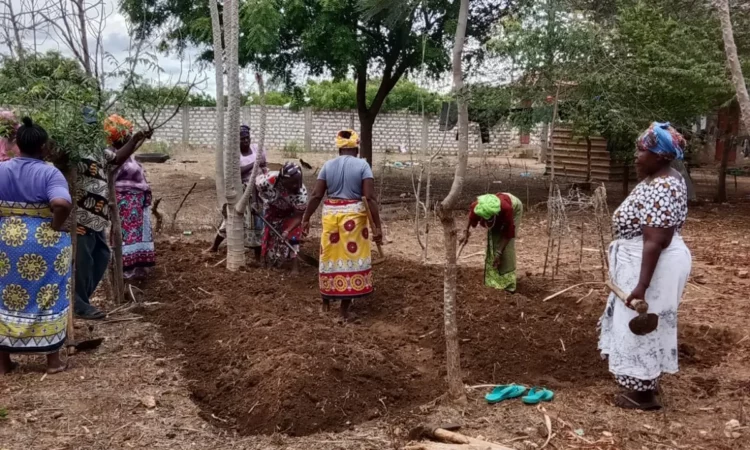
Kiriba Chama is a community group whose members already support one another through shared labour, local exchange, and collective problem solving. The pooled basic income model builds on this existing social structure by placing liquidity into a shared pool rather than distributing one-time individual transfers.
A first amount of 180 USDC was introduced as shared community liquidity into the Kiriba Chama pool. Pool members can access the pool in rotation based on community priorities and readiness. Access to the funds is tied to participation. Members who receive support are expected to contribute to the community through labour, services, or goods. In this way, the pool functions as a bridge between external funding and local productive activity.
Use of Funds
In march five members each accessed 36 USDC from the shared pool. The funds were used for agricultural needs, including fencing materials, seeds, and other farm inputs. Fencing was particularly important to protect crops from animal intrusion, while seeds and inputs supported preparation for planting.
Alltogether the funds supported agricultural preparation while reinforcing cooperation and collective resilience within Kiriba Chama.
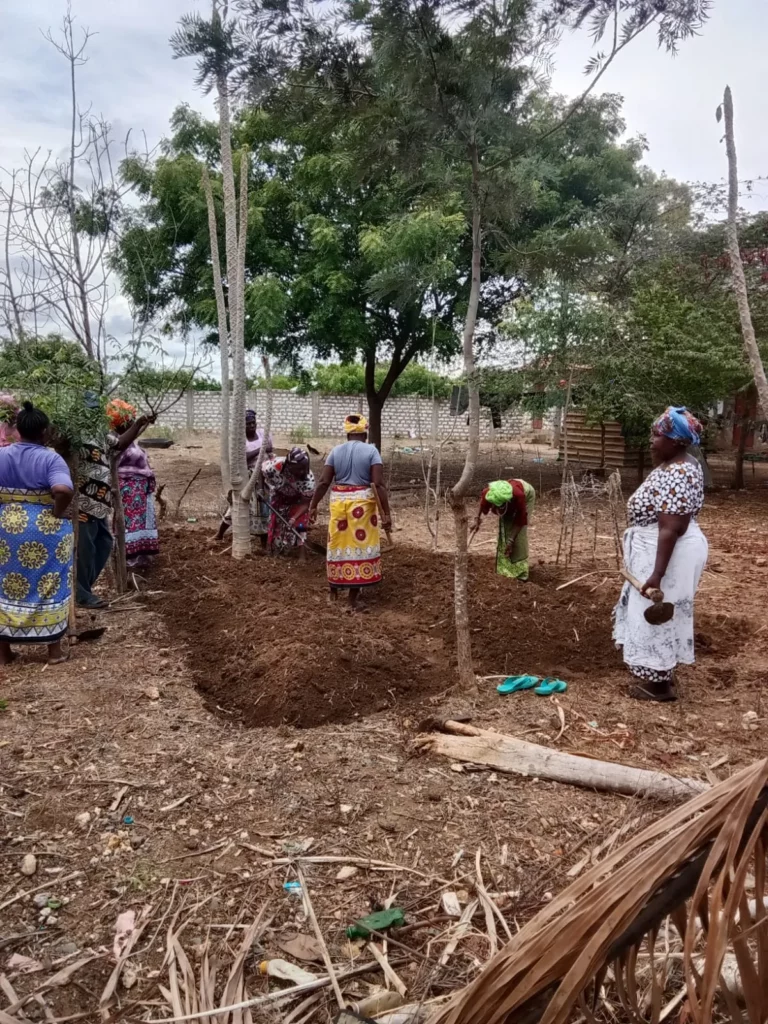
Margaret Kadii is a married woman and a mother of three children who attend a local government school. She works as a kindergarten teacher and is both a resident of Kiriba and a respected village elder.
From the pool, she accessed funds to purchase fruit tree seedlings, which she plans to plant during the rainy season. Her dream is to grow and nurture a large fruit garden.
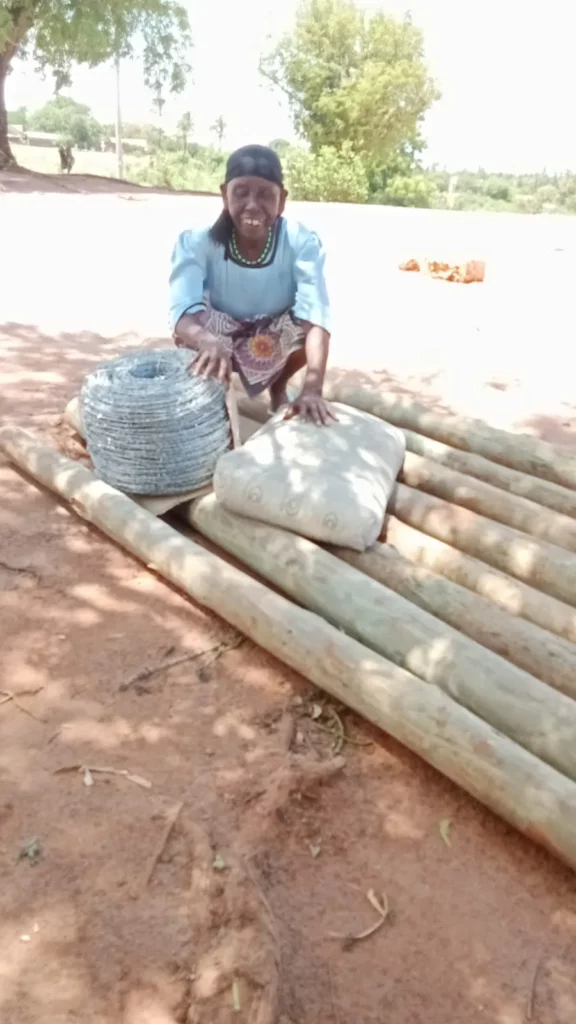
Nyevu Kahindi a widow with 2 grown kids who are currently all married. She’s also a grandmother to two and all who reside in Kiriba Village.
Her future plan is to produce more food to feed her family and the community around her.
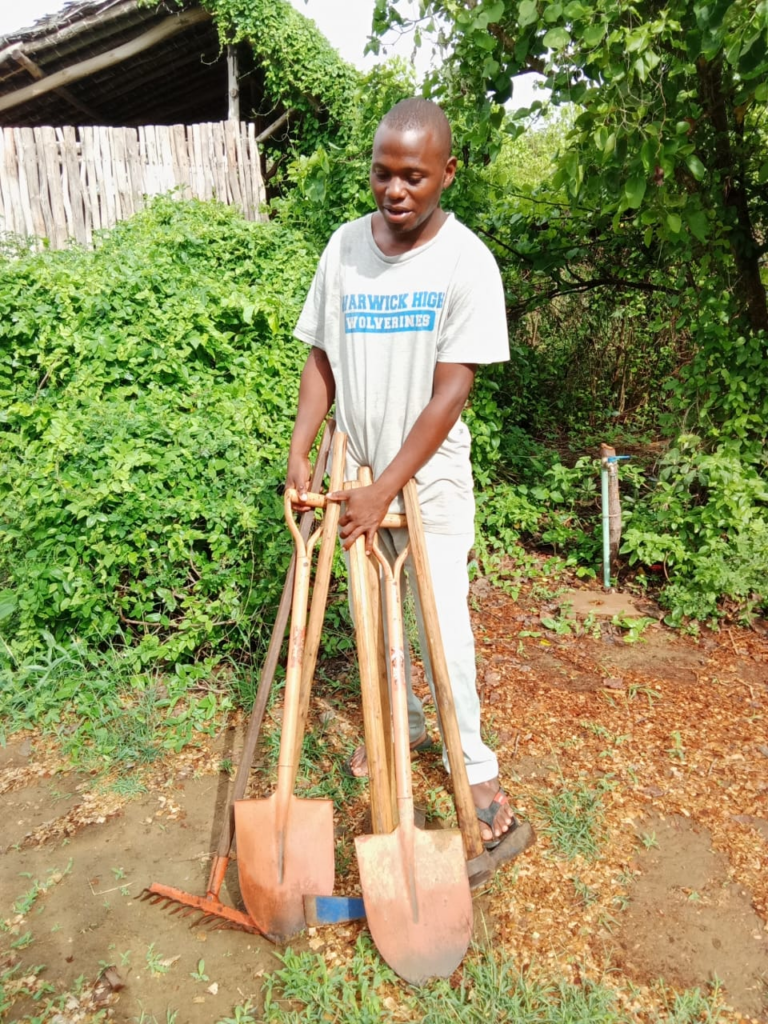
George Shungu, Farmer/Syntropic Agroforestry Farming teacher. He is a father to 2 kids, one kid is a student in a government school within Kiriba village.
His future plan is to impact community members with skills on syntropic agroforestry farming, to produce not only more food, but good quality food. He accessed some money and bought tools to improve his farming skills.
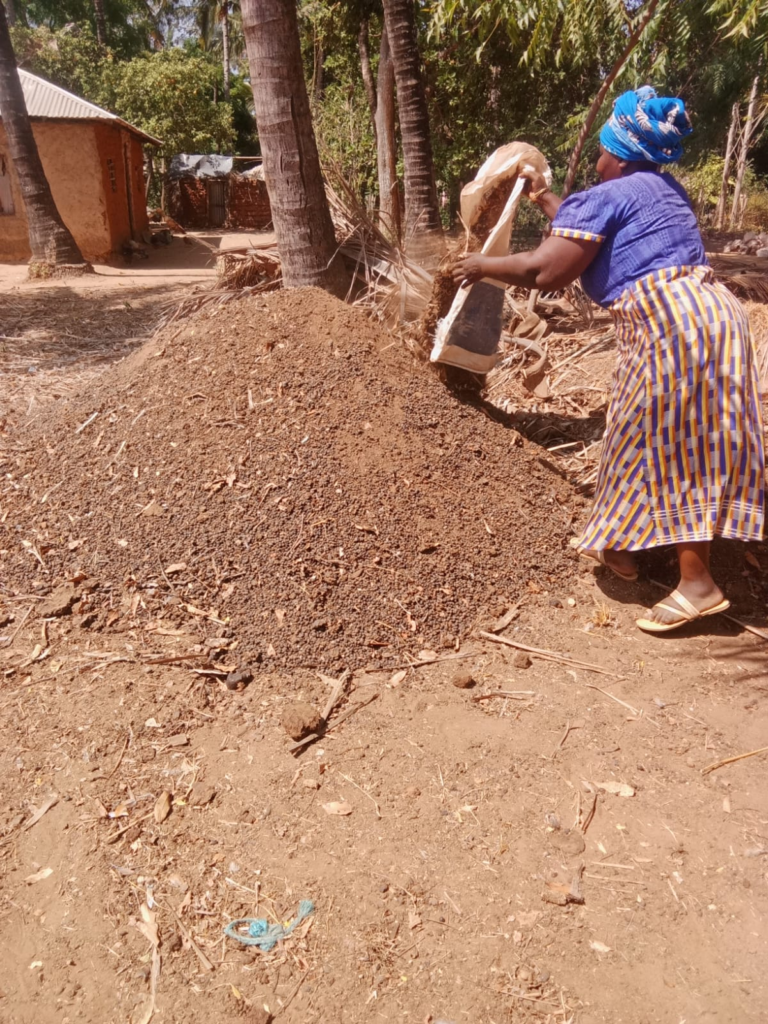
Bahati Kahindi is a widow and a resident of Kiriba, with four children who are all married and have children of their own. She is into vegetable farming as her main livelihood activity. Using the funds she accessed, she purchased manure to support her farming.
Her future goal is to manage a large farm where she can produce enough vegetables for her own consumption and sell the surplus.
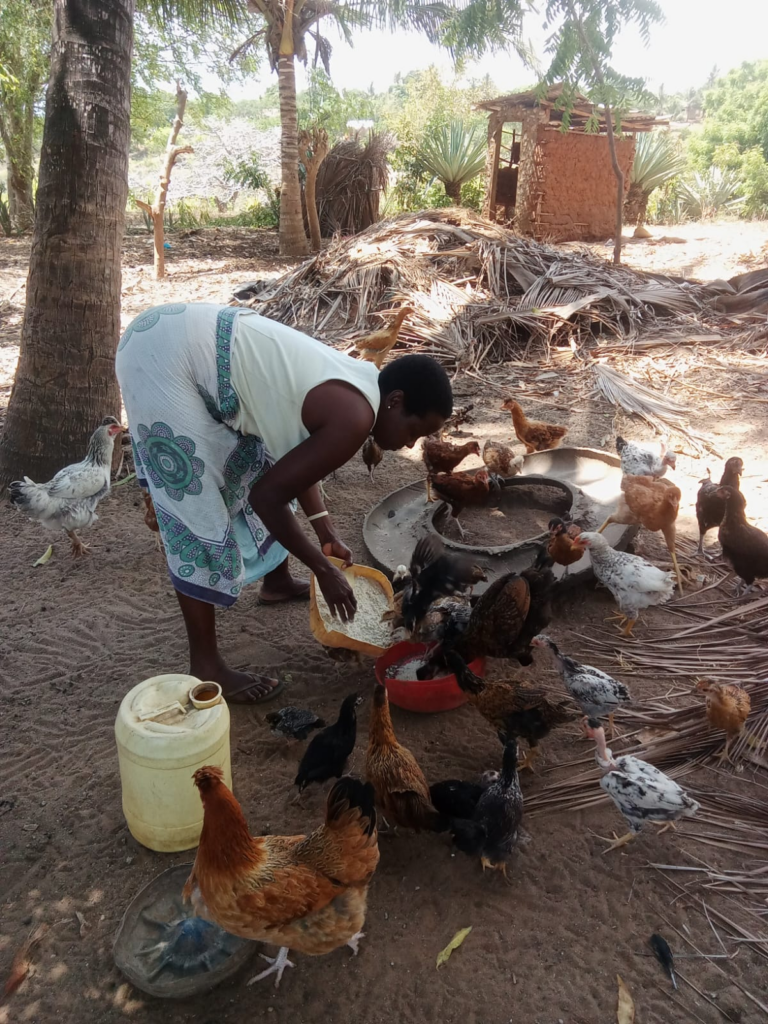
Amina Nguwa is a resident of Kiriba and a married mother of three children, all of whom are now married. She engages in poultry keeping as her main livelihood activity. Through the funds she accessed, she purchased maize germs to support her poultry.
Her future plan is to expand her production of meat and eggs to better feed her family and the surrounding community.
