An unconditional cash transfer
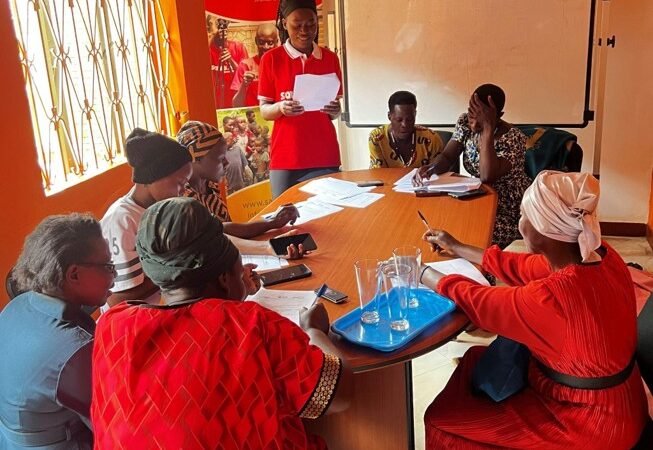
On September 8, ten women participating in this project each received an unconditional cash transfer of UGX 530,000 (approximately USD 140). In the photo above, the women are filling out the baseline survey at Sawa World’s offices.
This marks the beginning of an important journey: exploring how direct financial support, combined with existing business skills and knowledge, can help women strengthen their livelihoods, grow their businesses and build greater financial independence.
What will they do with it?
Fitting with the idea of unconditional cash transfer, the women are free to use this money in the way that they think is best. Research shows that this is a very effective form of aid.
Almost all the women said they intend to invest the cash in their businesses. This is not surprising, since all of them are already trained in business skills through the Sawa World Ujana Coffee Project. Some intend to add a sideline to their businesses; others want to expand their core business.
Will it work?
Will the money give them the head start that we hope it will? Will it function like an accelerator, raising these women’s income, independence, self-confidence and wellbeing?
To understand the support’s impact, Sawa World first established a baseline of the women’s present situation. This makes it possible to measure and compare changes after six months and again after twelve months. We would like to share some of the baseline survey outcomes with you.
What are their present businesses
The baseline survey revealed that the women’s livelihoods and business activities vary considerably.
One woman now has no business or income, and one is involved in a single business. All others are involved in two, three or even four lines of business. Coffee and poultry are among the most common enterprises, alongside other activities such as goat rearing, tailoring and shoemaking.
For many women, monthly incomes are approximately UGX 300,000 (72 USD). This means that the UGX 530,000 (140 USD) cash transfer represents almost two months of income for these women. However, earnings vary, with some women earning considerably less and others earning more.
What changes can we expect?
Almost all the women expressed an interest in expanding one or more of their existing businesses.
Their plans reflect their individual priorities. Some have identified specific investments (a larger coop, purchasing a water storage tank). Two women also indicated that they would like to use part of the money to support their children’s school fees. Others are still considering how best to allocate the funds.
When asked about their income aspirations, not all the women specified a target. However, among those who did, expectations were ambitious, with some hoping to increase their incomes by 300% or even 600%.
We will follow up on the women’s progress and share the results later next year.
