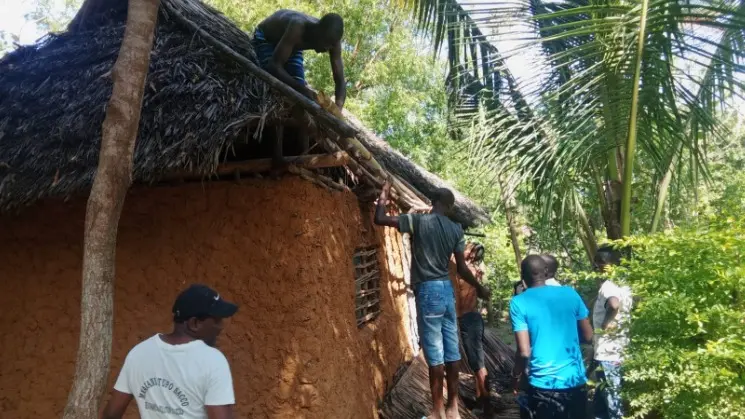
The Nguvu Kazi Group, based in Kiriba Village, is part of a wider fabric of community initiatives that includes Mnyumbuni, Kiriba Chama, Neema and Upendo Kiriba. Like these groups, Nguvu Kazi is rooted in shared values of cooperation, resilience, and mutual support. Members work side by side in farming, run small businesses, and show up for one another in times of need—whether through labour, goods, or care.
An amount of 180 USDC was introduced as shared community liquidity in the Nguvu Kazi community pool. Pool members can access these funds on a rotating basis. What makes this model work is its emphasis on participation. Those who draw from the pool are expected to give back—through labour, services, or goods—ensuring that value continues to circulate within the community. In this way, the pool acts as a living bridge between external funding and local economic activity, strengthening both.
Use of Funds
The funds were managed collectively, with members agreeing on how the support would be allocated according to their most pressing needs. This approach continues to strengthen cooperation while enabling members to invest in productive activities and household improvements.
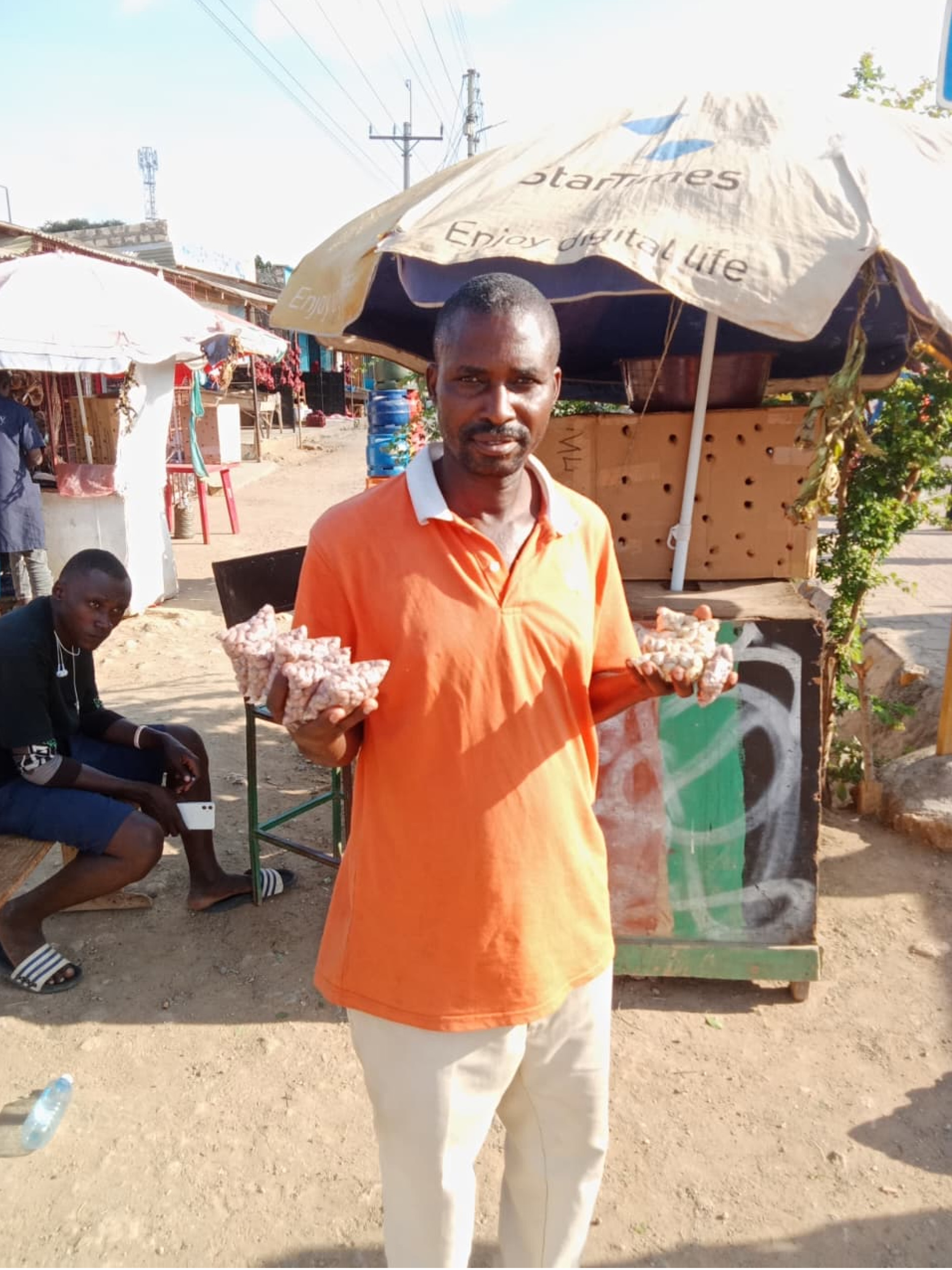
The group allocated KES 5,000 to Akiba Chome to expand his cashew nut and peanut business.
Akiba shares:
“I recently planted tree seedlings, but I was worried because goats could easily destroy them. I used the support to buy a shade net that will protect the seedlings as they grow. The support is helping me care for the trees and secure their future.“
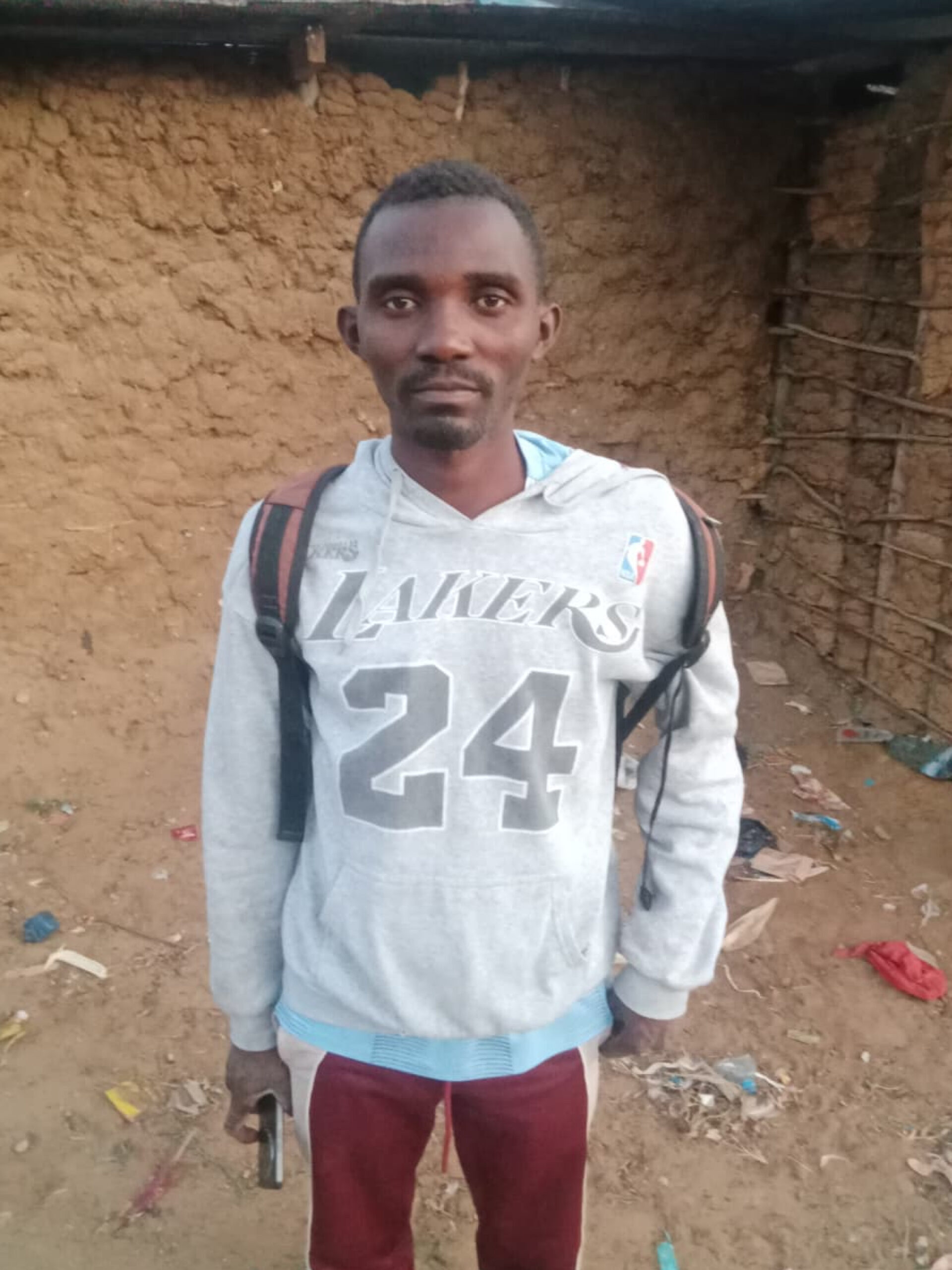
The group supported Markson Fondo to construct a chicken house.
Markson says:
” I have wanted to build a chicken house for a long time. This support has helped me begin that project, and I look forward to raising more chickens in a safe place.”
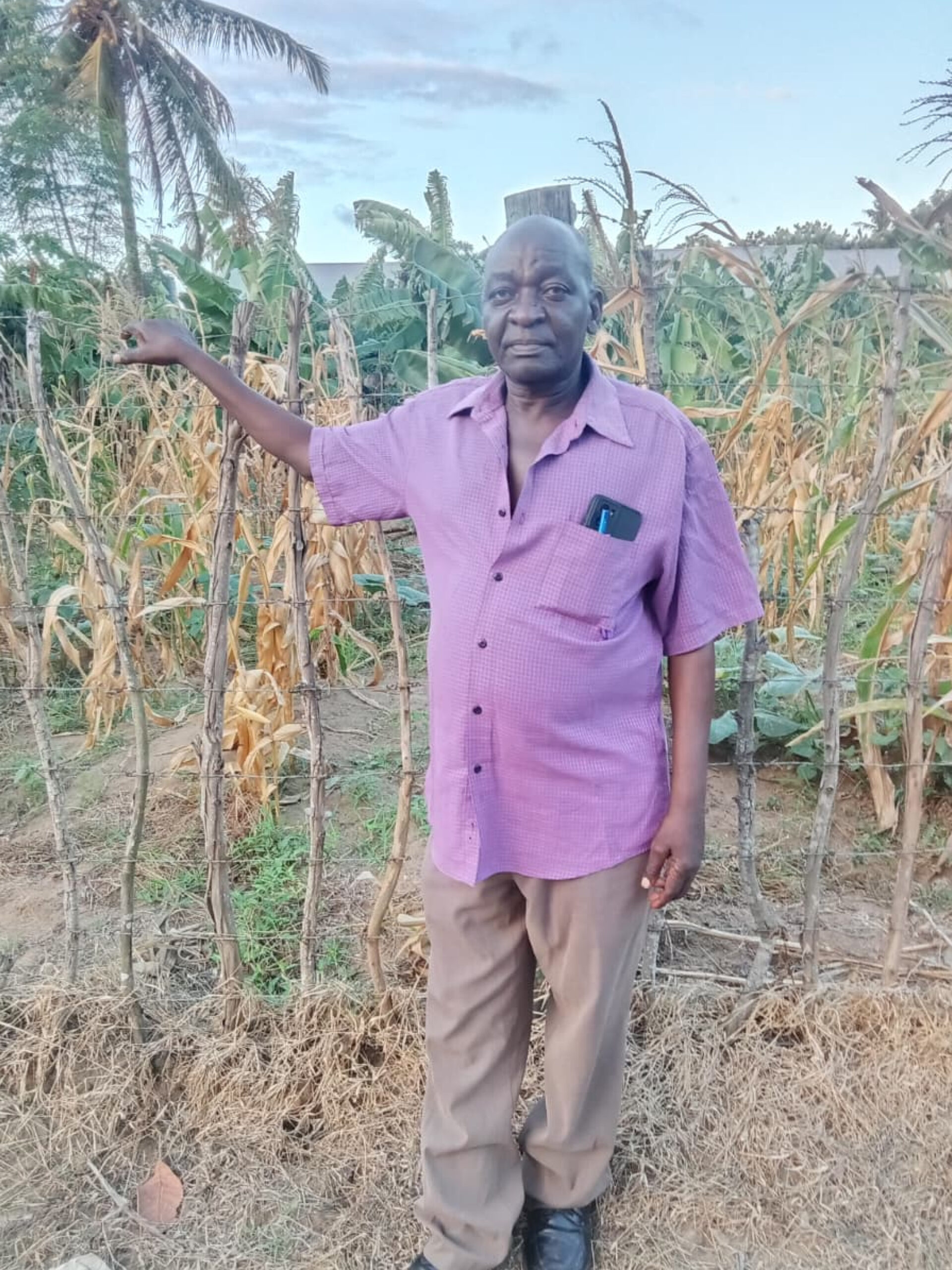
The group allocated KES 5,000 to Katana Fondo to fence his kitchen garden.
Katana says:
“I used the money to fence my kitchen garden so that animals will no longer destroy my vegetables. This will help me produce more food for my family. “
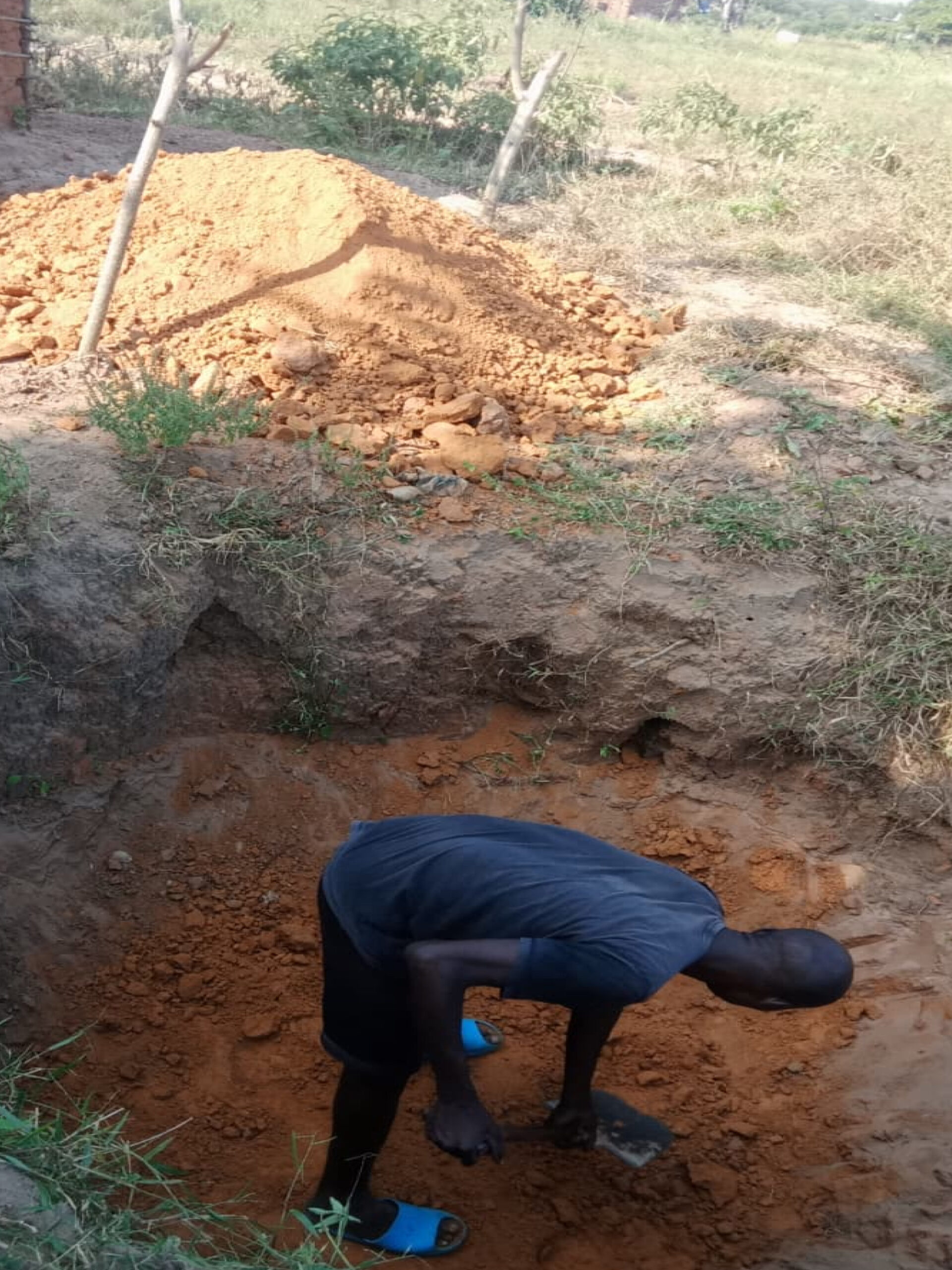
The group supported Jackson to purchase building materials for constructing a septic tank to improve household sanitation. In the picture he is digging for his septic tank.
Jackson says:
“I bought building materials for my septic tank, which is an important improvement for my home. I am thankful for this support because it has enabled me to begin something that I could not afford on my own.”
Working together through the commitment pool
The Nguvu Kazi group collectively decided how the pooled funds would be used to address members’ priority needs. As with the other groups participating in Kiriba, members who access support continue contributing to the community through their labour, goods, and services.
Each member who takes from the pool commits to supporting the next members with their own resources, goods, or services. In this way, the value of the basic income injection continues to circulate within the group, strengthening mutual support and building long-term community resilience.
So this round of support demonstrates how pooled basic income can enable a community to invest in productive livelihoods while reinforcing cooperation and shared responsibility.
